travel
Travelling with fly fishing gear
Plan well once and you never have to think about it again
There are multiple ways of organizing your gear but this is the way I like to travel. Airports and airplanes are not really places I enjoy spending time in and my strategy is all about minimizing stress.
The bag strategy
One checked bag with all the fishing gear and clothes. It is true that the checked bags might get some heavy handling when they move through airports and get loaded into planes, but with smart packing we can mitigate all that. Rod tubes, wading boots and reels don’t break easily.
One carry-on bag with electronics, camera and critical clothing. I often travel with a lot of camera gear, and lenses especially don’t do well being thrown around an airport. If you have space left over, your fly reel and waders can ride in the carry-on too.
Bag options for checked luggage
Many of the standard luggage bags don’t really fit a fly rod tube but there are tricks to make it work.
Some bags will fit a rod tube diagonally, and if that doesn’t work, try opening the zippered end cap of the rod tube and taping it shut with a piece of foam as padding — the tube might fit that way.
Some people use a standard hiking backpack as their checked luggage. Pack the rod tubes in the center and everything else around them. A 60L+ backpack should fit a week’s stuff.
I use Ortlieb Duffle RG 85. It is a waterproof duffel bag with wheels and backstraps making it easy to roll around airports but still easy to carry on your back. It fits a standard 4-piece 9ft rod case without any issues. The empty bag is also somewhat lighter than a typical checked bag. There is also the Ortlieb RS 85 that is similar but lighter and doesn’t have the rigid bottom and metal handle. I went with the RG 85 for the rigid bottom and the more comfortable extending handle. There are also bigger 110 and 140 liter versions but the 85L was the right size for my needs and it is comfortably within checked-bag size limits.
Carry-on and daily carry
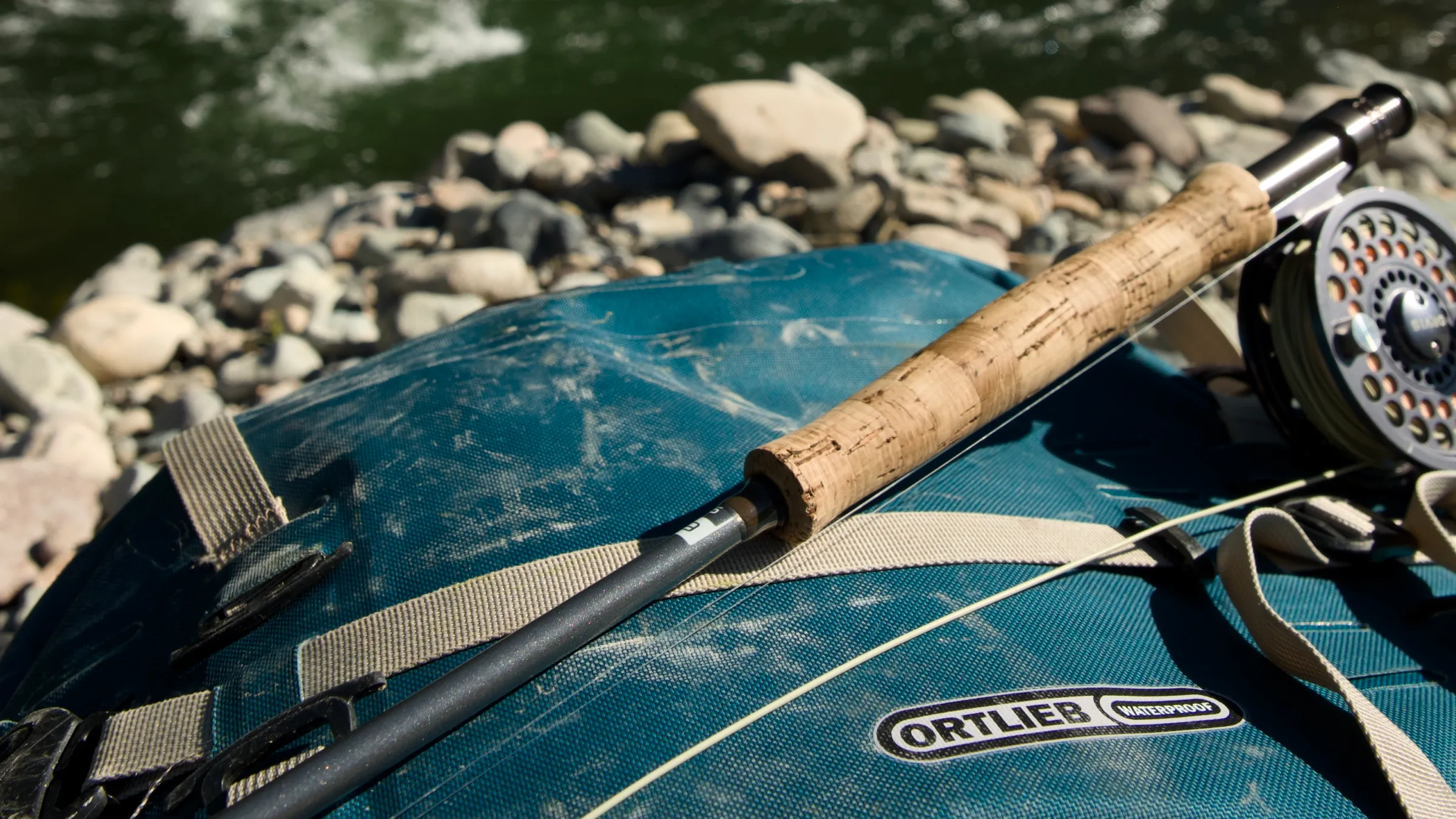
Ortlieb Atrack 35L – A fantastic bag! I use this as my carry-on in the plane and as my daily backpack on the water. Durable and comfortable bag.
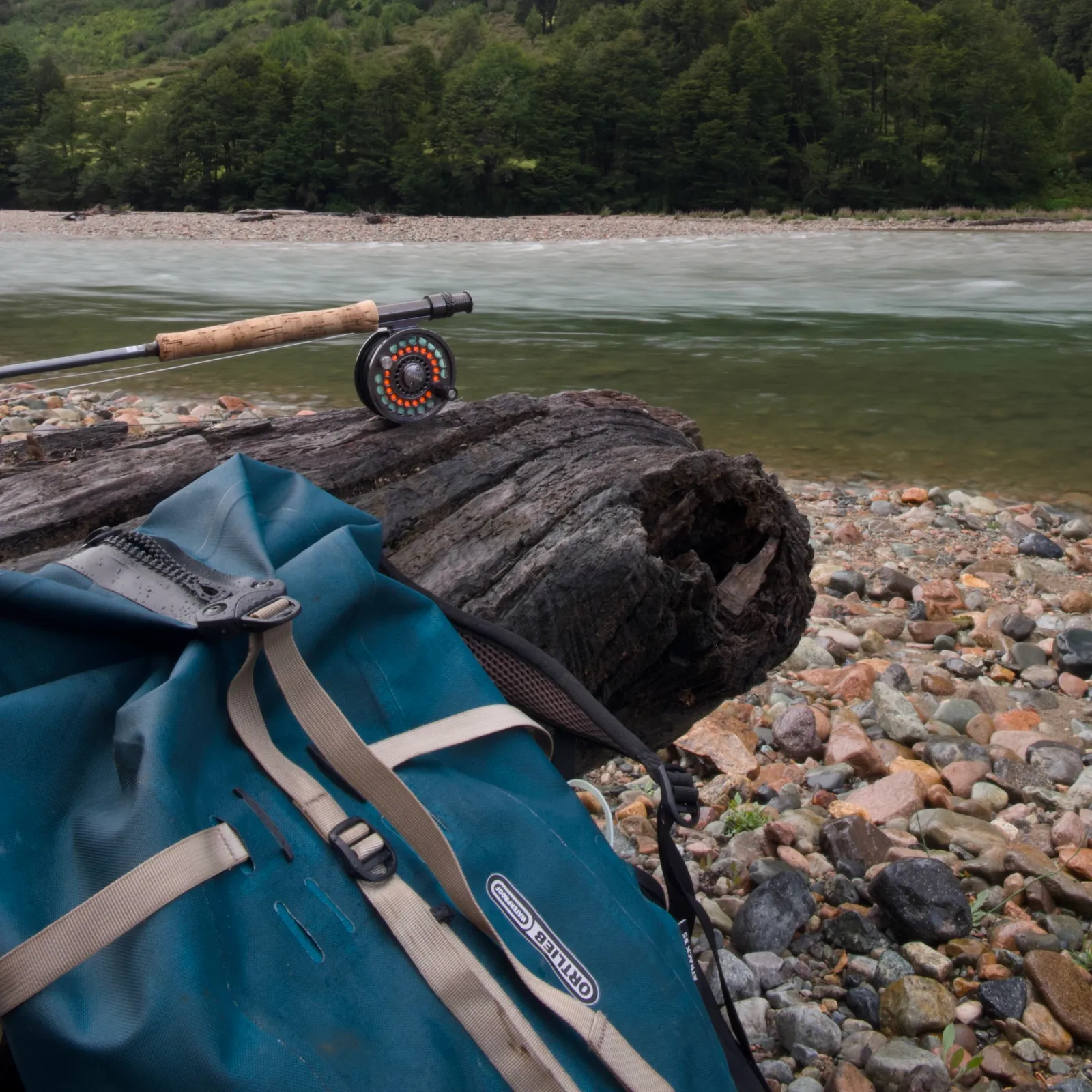 Ortlieb Atrack 35 on a rainy day on the river.
Flies, hooks and tools
Just keep the flies in the checked luggage. You don’t want to be arguing with airport security about whether your fly hooks are a danger or not. The same goes for all your tools: anything with a blade or a point goes in the checked luggage. If you travel with fly tying equipment, that belongs in the checked bag too.
Waders and boots
These usually go in the checked luggage — they’re heavy and bulky. If your carry-on has room, waders are a good thing to move there. Roll your waders, don’t fold them. Creases in the seams cause leaks over time. Stuff the boots with socks or a small dry bag to keep their shape.
Wading boots with felt soles can be a problem. Some countries (New Zealand, parts of Australia) ban felt soles to prevent the spread of invasive organisms. Patagonia and Norway don’t have this restriction, but rubber-soled boots are better for travel anyway — lighter, dry faster, and work on the hiking approach.
Insurance
Photograph all your gear before you leave. A wide shot of everything laid out and closeups of your most valuable items. If something gets lost or damaged, this makes the insurance claim straightforward.
Insurance policies differ in how they cover fly fishing equipment, and a five-year-old rod might be close to worthless in the insurance company’s books. Easy to check by asking your provider about an actual example.
What if the checked bag gets lost?
This has not happened to me yet but there is always a risk of the airline losing your bag. What you can do is be prepared if something goes wrong. For me that means that the most valuable things like my camera gear and laptop are in my carry-on along with a few changes of clothes that will get me through a day or two if my main bag is delayed. I also have an Apple AirTag in all my bags, just in case.
Many destinations have fly shops (Coyhaique in Patagonia, for example), so you can buy replacement gear — or ask us to arrange rental gear. Airlines have some form of compensation if your luggage arrives late or is completely lost. And on top of that you have your travel insurance that will cover the rest.
That’s the system. Pack the same way every trip and travel becomes easy. For destination-specific packing lists, check the articles: What to pack for a week of fly fishing in Patagonia.
Airport survival kit
- •Travel as light as you can
- •Leave 1kg of give in your bag weight limit — room for souvenirs or fishing gear bought on the trip
- •Photograph your gear before you leave — makes insurance claims easier
Tommi Heinonen
Founder, Kalakamu