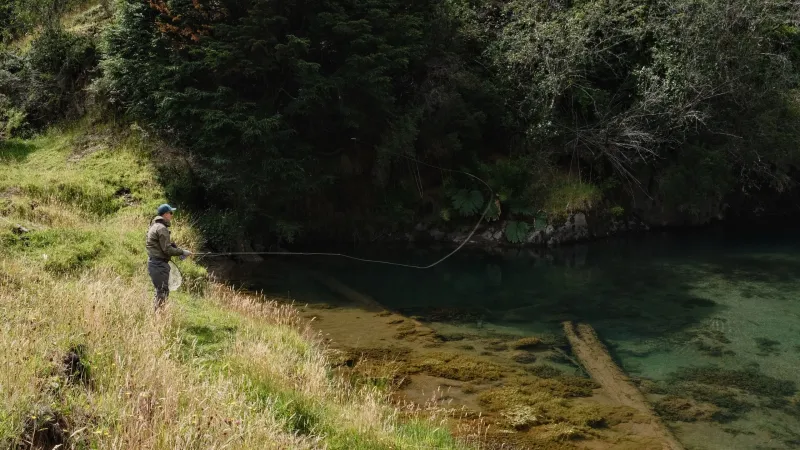
tactics
Matching the hatch in Aysén, Patagonia
The Aysén region is known for its dry fly opportunities and prolific hatches. Stoneflies, caddisflies, mayflies and terrestrials. Here’s what’s hatching, when, and how to match it.
This article is a mix of my own observations on the water and what I have learned from talking to local guides.
Nothing will replace your own observations on the water but this will help you be prepared with the right flies. Always trust your own instincts first.
Hatch Calendar
| Insect | Peak months | Key patterns | Hook sizes |
|---|---|---|---|
| Stoneflies | November, December | Fat Albert, Madam-X | 8–12 |
| Caddisflies | December, January | X-caddis, Streaking caddis | 12, 14, 16 |
| Mayflies | January, February | Parachute Adams, Comparadun, Found link | 12–18 |
| Terrestrials | February, March | Stimulator, Fat Albert, Chubby Chernobyl | 4–10 |
Stoneflies
Adult stoneflies show up in the Patagonian spring while the rivers are still running high. They don’t hatch on the water surface like mayflies or caddis. The nymphs crawl onto rocks and branches to emerge, and the adults can drop into the water from there. So fish close to the banks. Big rubber-leg stonefly nymphs are productive all season.
Caddisflies
The caddisflies live up to a month out of the water. You can often see large quantities of caddis flying over the river without them ever touching the water. This is the caddis migrating. Trout usually eat the adult caddis when they are emerging, laying eggs or as spent caddis. Smaller trout sometimes jump out of the water to catch a caddis mid-flight. The larger fish don’t usually bother as it is not enough of a meal to justify an energy-costing jump.
I prefer the lower-riding X-Caddis and Streaking Caddis over the Elk Hair Caddis.
Mayflies
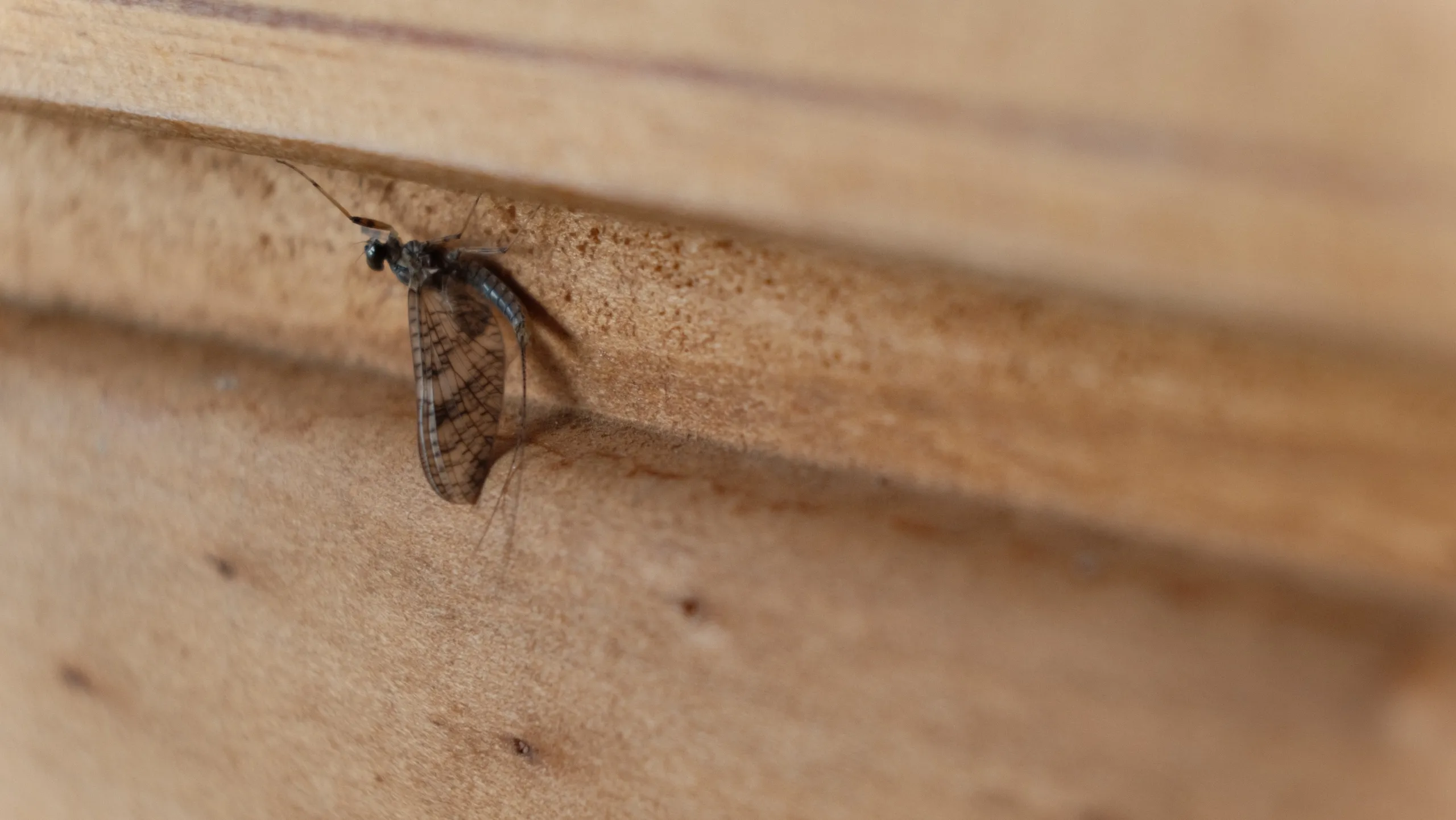
There have been some late evenings in Patagonia where I could hear the trout rising to something but could not see anything hitting the water. Many times it is tiny size 18 mayflies so make sure to have some small ones in your box too.
Mayfly on the cabin wall — Aysén, January
Terrestrials
Beetles, ants and hoppers are plentiful in Patagonia and the wind blows them to the water often. A big terrestrial is a welcome meal for the opportunistic trout. Don’t just dead drift these, a little movement can trigger a strike. A big Stimulator will catch fish most of the season even when nothing is hatching and you see no surface activity. Go big with these flies.
Cantaria Beetles
Also known as Darwin’s beetle. These things are huge (4-9cm in length). The male cantaria beetle has big jaws. Large foam flies are the standard imitator for Cantaria among the local guides but large deerhair flies work just as well.
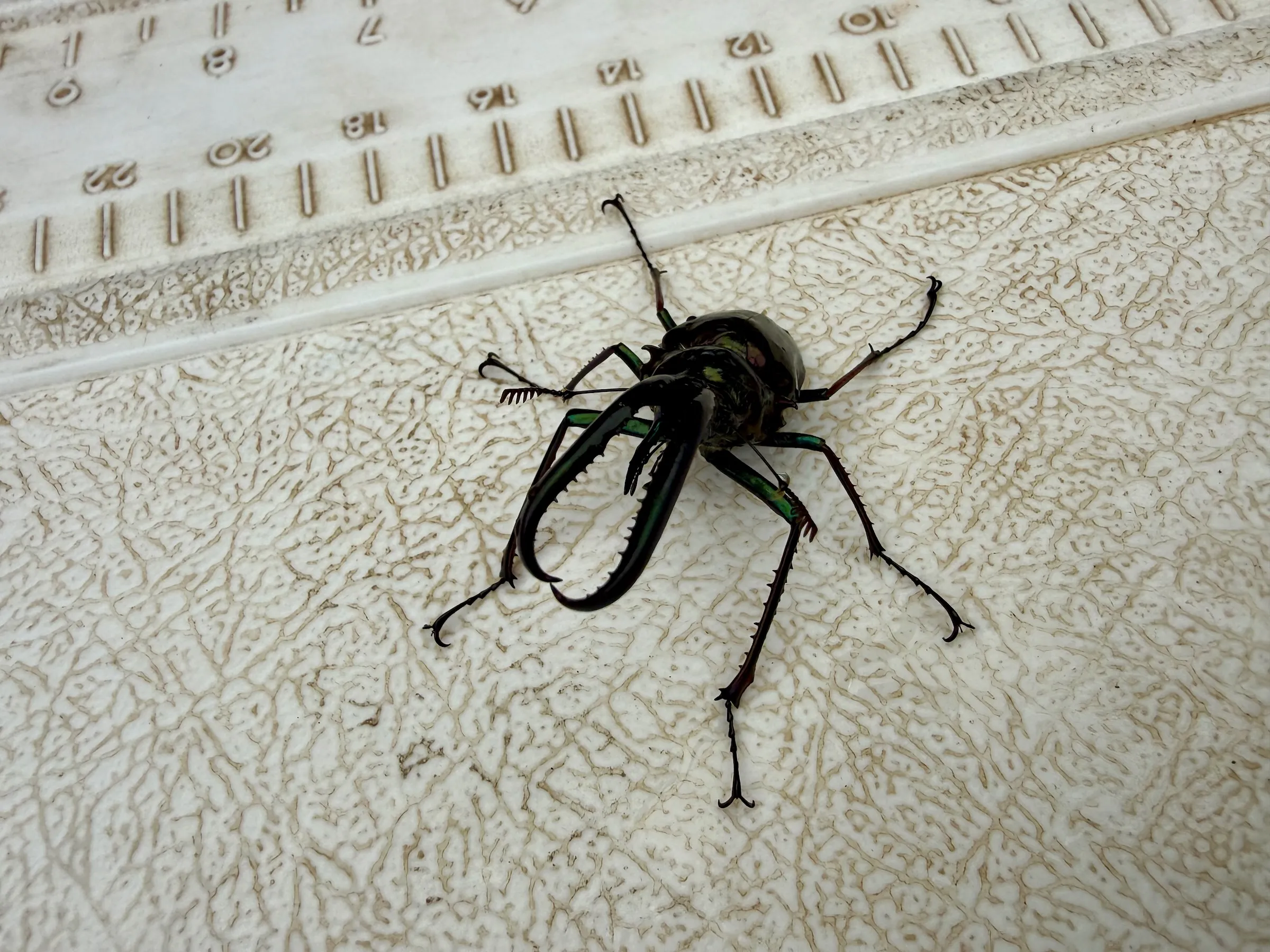 Cantaria beetle, or Darwin’s beetle — Aysén, February
Tactics for Dead Periods
Sometimes there are those days when nothing is happening on the surface. I firmly believe that there are always a few fish around that will take a dry fly no matter what. So my go-to on the slow days is a dry dropper rig. Big Stimulator or Fat Albert with a beadhead Pheasant Tail or Perdigon. Nothing wrong with going to tightline nymphing or using an indicator.
Essential dry flies and nymphs for Patagonia
- •Fat Albert — sizes 6, 10
- •X-Caddis — sizes 14, 16
- •Streaking Caddis — sizes 12, 14
- •Parachute Adams — sizes 14, 18
- •Found Link — sizes 12, 14
- •Beadhead Pheasant Tail — sizes 14, 16
Tommi Heinonen
Founder, Kalakamu